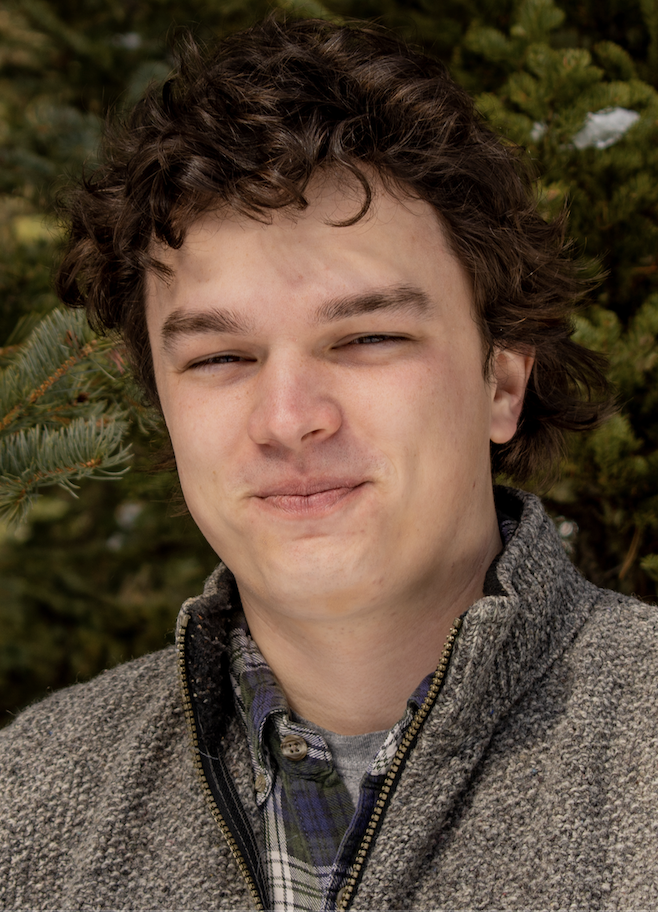
Will Rogers
Graduate Student, Yale University
will.rogers [AT] yale.edu | rogerswill47 [AT] gmail.com
165 Prospect, New Haven, CT 06511
I'm a behavioral ecologist fascinated by the dynamic interplay between animal behavior and parasites (broadly defined). My research explores how parasites are not only costly outcomes of how animals interact with each other and their environment, but also how parasites themselves can shape host behavior. I'm particularly interested in the feedbacks that emerge from these interactions and how they shape social structure, host ecology, disease transmission, and population dynamics. By combining observational studies, experimental approaches, and long-term datasets, I aim to uncover the mechanisms linking behavior, physiology and immunity, and parasite costs. Ultimately, I seek to understand how individual-level interactions scale up to influence ecological and evolutionary processes, providing insights into the complex relationships between sociality, health, and survival.
I’m currently a 5th-year Ph.D. student with Vanessa Ezenwa in the Ecology and Evolutionary Biology Department at Yale. In my dissertation, I focus on the role social interactions play in both exacerbating and mitigating the costs of infectious disease, and how changes in host behavior in response to infection shape both disease outcomes as well as broader host ecology. I have had the immense joy to tackle these questions in African buffalo (Syncerus caffer), focusing on bovine tuberculosis (Mycobacterium bovis) and gastrointestinal nematodes. Through this work, I have been lucky to collaborate with other teams, including Timm Wild and Martin Wikelski at MPI-AB, Anna Jolles, Brianna Beechler, and Rob Spaan at Oregon State University. This work would be impossible without the excellent vets, scientists, and specialists of SANParks Veterinary Wildlife Services and Scientific Services.
Before coming to Yale, I got my BS from Montana State University in Ecology and Conservation Biology and Ecology. There, I worked with Scott Creel on measuring moose stress responses to winter ticks and had the opportunity to learn more about demographic and movement modeling. From this background in quantitative ecology and animal physiology, I later worked with Paul Cross and Raina Plowright. With Paul Cross, I had the opportunity to learn how to model disease dynamics (particularly in the context of chronic wasting disease). Under Raina Plowright, I was able to apply this knowledge to model the effects of disease testing on COVID-19 epidemics on campus. These experiences cemented my interests in disease ecology, particularly where animal behavior and parasites intersect.
I grew up in Tallahassee, Florida, where I spent most summers exploring Apalachicola Bay with a fishing rod and castnet. I was always interested in science and animals growing up, but I didn't realize folks actually studied interesting questions in wildlife until much later. I got involved with Florida Fish and Wildlife Conservation Commission groups at the start of High School. By chance, I went with one of these youth conservation groups to visit Tall Timbers in 2015. There, I got to see long-leaf pines for the first time, and get a glimpse at the wiregrass praries that used to blanket the Southeastern US. I had the chance to volunteer and later work with a variety of biologists at Tall Timbers, namely: Aaron Griffiths (now USFWS), Katie Hooker (now FSU), and Theron Terhune. These incredibly generous and patient folks showed me how to track animals with VHF, run small mammal trapping, capture wild bobwhite quail broods, fix ATV tires, etc. From then on, I was hooked.